


To what extent should we expect American law to reflect Christianity’s mandate to welcome the foreigner?
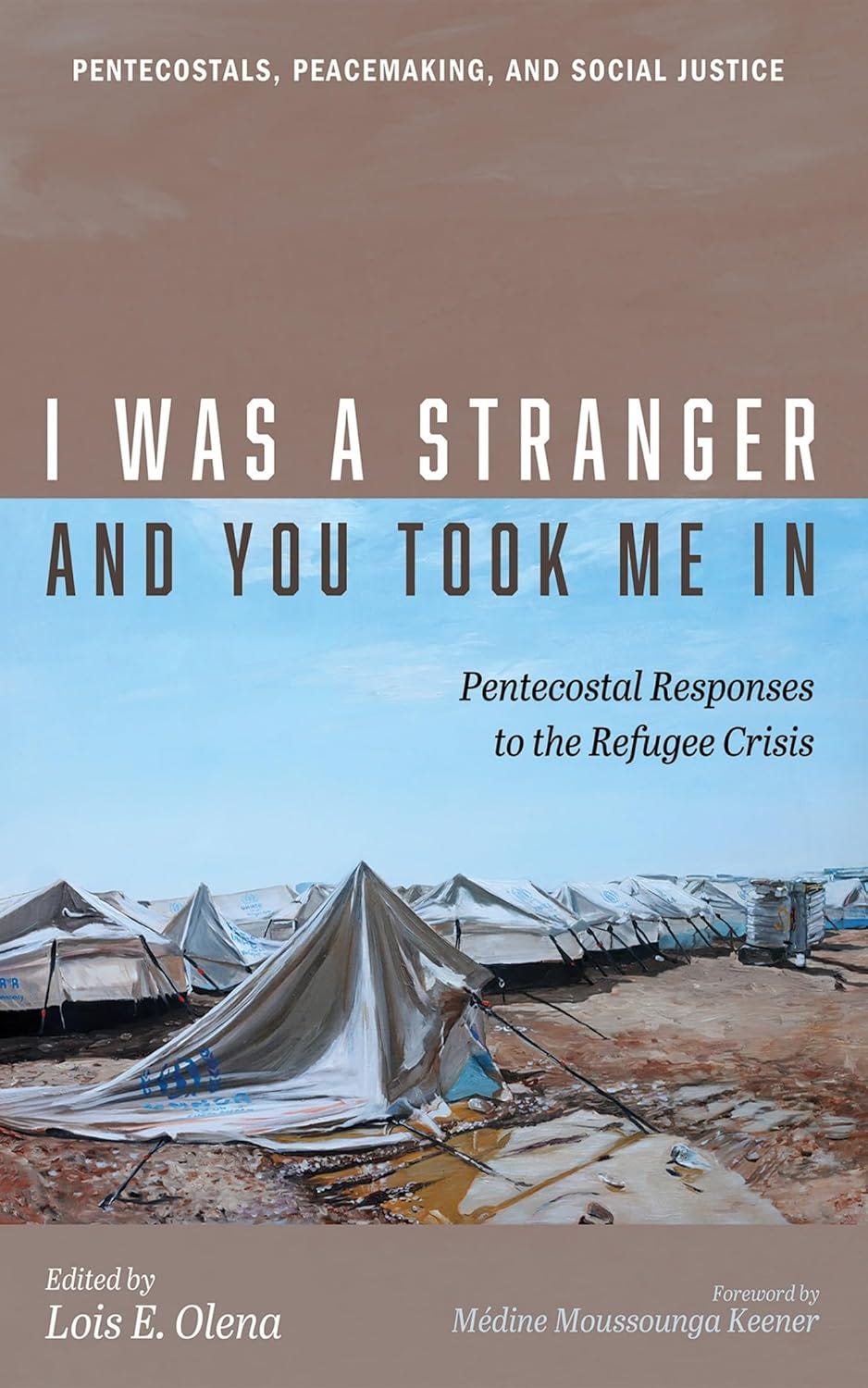
Last night I was privileged to be part of the a Zoom-launch for I Was a Stranger and You Took Me In: Pentecostal Responses to the Refugee Crisis. I contributed a chapter on the book of Ruth, and how Ruth’s story might helps us see how the way we treat our food is intimately connected to how we treat foreigners (this may seem like an odd claim, but I guarantee you it’s revolutionary!).
The recording of the call is forthcoming, and I will be sure to share it once it’s available.
The Lurking Question 👀
One of the things that I kept reflecting on as my fellow authors and I gave brief intros to our chapters and fielded questions was the ways in which, for each contributor, lurking in background, were assumptions about how the Christian faith ought to influence American (or, in some cases, Australian) legislation, jurisprudence, and—ultimately—culture.
At times, there was a clear connection: America should treat immigrants and refugees how the church should treat immigrants and refugees.
But other times the connection was less obvious: the church is called to be the church regardless of the legal system’s regard for Christianity.
One might put the question like this: Who is my foreigner? As an American, it’s anyone who doesn’t have legal status in the United States. But if we take the Bible seriously that the church is “a holy nation” (1 Pet 2:8), for the Christian it might include anyone who’s not a Christian.
In my experience, most Christians who are concerned about how immigrants are treated in the USA are guilty of slippage in the target of their critique. Is the church failing to live up to itself? Is America failing to live up to itself? Are those two questions one and the same? Or can they be addressed separately?
From my perspective, I think they have to be answered separately, if only for the sake of maintaining the reality that the church is the global people of God and cannot be identified with any one nation-state. Membership in the church will always be a distinct citizenship from that whatever other passports we might have.
Keep These Things in Mind 🧠
First, any attempt to say that America should do what the Bible and the Christian faith says will be susceptible to the secular critique that America is not a Christian nation. In the most extreme circumstances, one might be accused of being a Christian Nationalist. Many self-proclaimed Christian nationalists suggest that their only desire is for Christian morality to be privileged in public spaces (however much one might think that claim is made in bad faith). If that’s all it takes to be labeled a Christian nationalist, then get ready.
Second, and parallel to the first, what does one make of the separation of church and state? It’s important to remember that that’s not in the Constitution. The founding document is more specific: “Congress shall make no law respecting an establishment of religion, or prohibiting the free exercise thereof.”
Nevertheless, the separation of church and state is a deeply valued cultural commitment, and at times vigorously defended by Christians themselves—especially when it comes to the “free exercise” of religion (think: no cakes for gay weddings).
Third, to what extent does one think that the tradition of human rights and inalienable human dignity in the West is the inheritance of centuries Christian witness? Are certain Christian moral commitments already baked in to everything that it means for America to be America? And if so, are the first two points of discussion above moot?
The Bottom Line 🧐
At the root of it, the questions is: What tradition we should rely on for a vision of the common good and human flourishing as a nation-state? That vision will never emerge in a vacuum.
I invite you to give me your thoughts ⤵️⤵️⤵️
The thing that continues to puzzle me is that so many who say we were founded as a Christian nation, and it's the government's job to protect privileged status for Christianity, are also the very first to object when it is suggested that the Government should act Christianly toward the widow, orphan, and foreigner: "That's for individuals and churches to act out, not the government!"
Joseph, have you read Bonhoeffer's tome Ethics: specifically the Chapter, "State and Church"?
His thinking helped me immensely in 2015 when I began in my vocation in a regional refugee resettlement office in the U.S. opened by appointment from the Governor.
For your readers who have not read the chapter:
Bonhoeffer viewed the State as being under a divine mandate for maintaining law, order, and justice in a fallen world. He would argue the State is accountable to God, and the Church must ensure the State remains within its limits, aids victims of injustice, and resists the State if it becomes tyrannical or threatens the gospel.
The more resonant aspects of Bonhoeffer’s view on the State were written down here in my notes:
Bonhoeffer had a Kantian view of the State. He argued the State is not spiritually generative, but a necessary regulative framework, designed to uphold law and order in a fallen world.
Bonhoeffer argued the Church has a responsibility to do the following:
Recognize the Limits of State Authority: Bonhoeffer argued the State forfeited its mandate when it ceased to be a guarantor of justice and the purveyor of injustice.
Dialogue with the State and Question the Actions of the State: He held a high view of the Church, which meant he believed the Church is called to assist the State to be the State by holding it accountable to a higher law when it administered justice.
Aid the Victims of the State: He believed the Church should provide sanctuary to those falsely accused or harmed by state, regardless of their status, which he drew from his experience under the Third Reich.
Resist the State: This was his more controversial view. He, like his contemporary MLK, argued for taking taking direct action to stop the State when it overstepped its divine mandate.
Challenge the Idolatry of the State: Bonhoeffer warned against the penchant for idolatry of the State, in authoritarian regimes.
I think I am among a discerning audience on this Substack, so I will leave it to you to interact with his views as they relate to an asylee, a refugee, or anyone interacting with ICE under U.S. immigration law, as it is applied.
I thought these ideas might be a helpful prompt for discussion.
(Kari Hoggard - aka "Agora")