


Most leadership advice, codified into books, podcasts, and tweets (sic), is just a racket. It might even be a cult, at least in its current iteration in the church. I’m not trying to throw shade at anyone in particular. I just want to throw shade at Big Leadership Business. The stuff that makes money off of pure hearted pastors and church leaders who are looking anywhere and everywhere for a foothold in the ever changing winds and waves that toss the church to and fro.
I’m not against leadership advice, obvs. This Substack is called Pastoral Theology, which means I write about being a leader in the local church. What I am concerned about—as I talk about in my recent book, Resurrecting Worship—is the encroaching and unchecked ideology that being a good leader in the marketplace or in politics is what makes for good leaders in the church. It’s a real problem.
For the vast majority of church history, a pastor’s greatest and most prized possession was a Bible for his local church. That no longer seems to be the case. Instead, we prize a compendium of leadership “principles” in proliferating forms of media.
Putting the Problem in a Spotlight
Check out these two Instagram reels that both work with marketing data and principles to talk church growth. Note two things:
There’s nothing explicitly Christian about the advice. The first reel mentions “discipleship,” but the word is synonymous with “loyal customer.” The problem is the same in the second reel.
They contradict each other: one says to focus on online reach, the other says that making that a priority is wrongheaded.
Can we maybe talk about Jesus?
If we’re going to talk about good leadership for the church, it seems to me that we should look to Jesus, and to do that one needs to crack open the Bible. I don’t mean to Jesus juke all of you, but what else am I supposed to say?
I’m well aware that there’s a lot of people out there making the same claim I am. How else would one ultimately suggest one might lead a church other than like Jesus? The problem is that Jesus can be so easily forced through specious biblical interpretation to become the leader we want him to be rather than who he is. So, with trepidation, let me nevertheless offer just one example that hopefully avoids the potholes by being theologically grounded and by appealing to a specific Gospel passage.
Reeds in the Wind
Jesus didn’t leave us out to dry. That’s a cheeky way of saying that atonement theory is a good place to begin. (Atonement theory is Christian reflection on how it is that we are saved through Jesus’s death and resurrection). That’s most definitely not a marketplace principle. Who would die for their company to succeed? And who would die unjustly for their company to succeed? Scarcely anyone.
Being a good leader in the church involves taking the shame and rejection and punishment of others upon oneself, like Jesus did. Not in the place of Jesus, to be clear, but to take the punishment of others with Jesus. That’s important to say out loud, because we can’t save anyone; only Jesus can. Yet, Jesus nevertheless invites us into his work.
I've had greedy, lying, racist, sexist, and classist people in my church from the beginning. We’re a repenting church, but I don’t for one second think that I can avoid the disdain of the public when big time sinners take a seat in the sanctuary and start making friends. I’m no Jesus, but I’ve done my best to never leave people out to dry, even when their major sins affect the public witness of the church.
Leading like this will hopefully never mean bodily death. But it will sometimes lead to political and marketplace death. We might lose our position of leadership and influence. We might not be able to escape the ire of public opinion. But making other peoples’ problems one’s own problems is what being a Christian leader looks like.
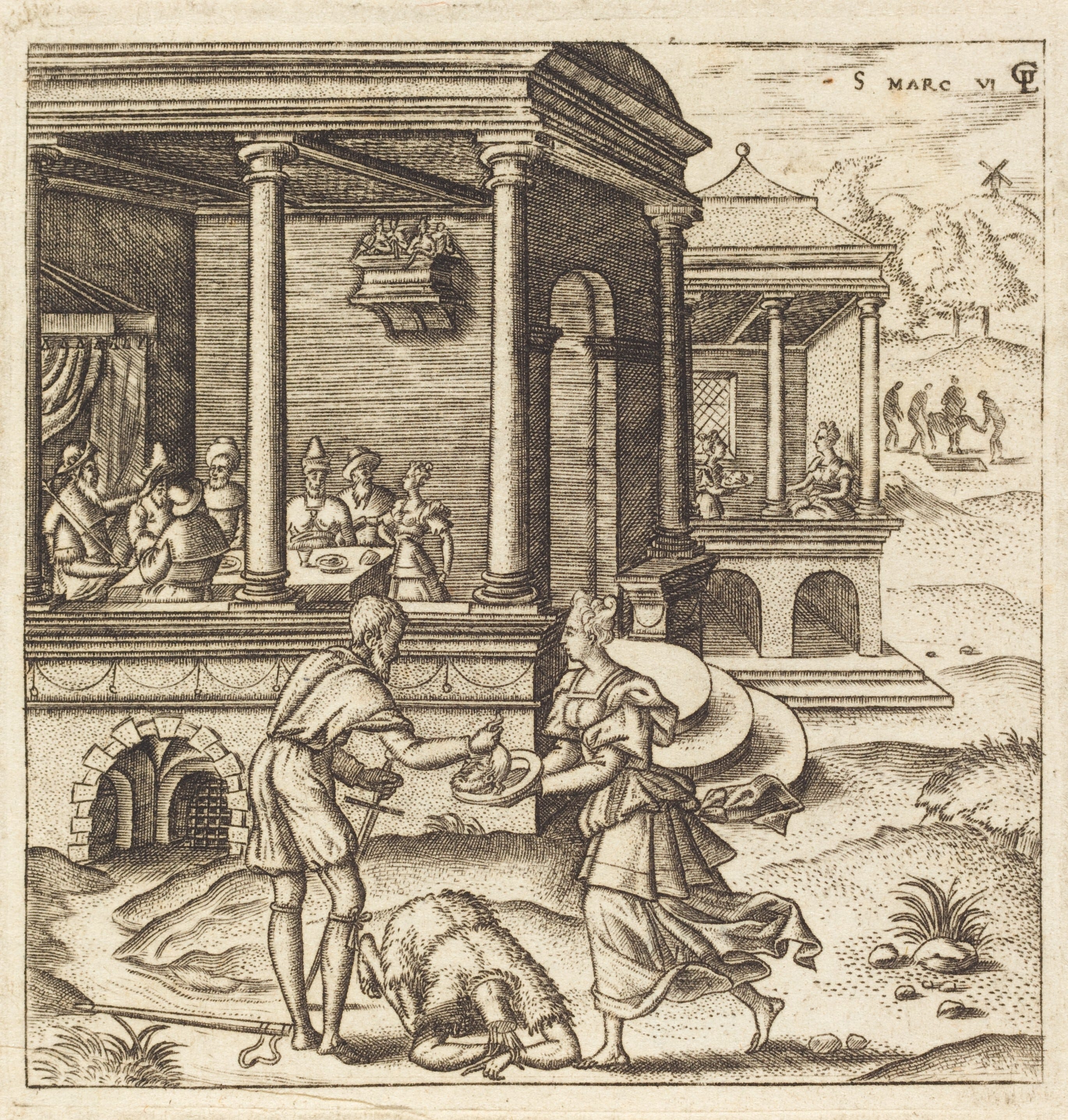
In Luke 7, Jesus asked the crowds what they went out to the wilderness to see. He’s was talking about John the Baptist. Keep in mind that John the Baptist had already sabotaged his political career by picking a fight with Herod. He would soon die, like Jesus would soon die. Yet even with all that, Jesus stood by John’s side, making John’s problems his own. Jesus didn’t leave John out to dry to make himself more marketable to the crowds or more palatable to Herod. That’s why Jesus asks the crowd if they went out to see “a reed shaken by the wind.” The normal course of things in Israel’s history was in fact to leave prophets out to dry.
I have friends in what seems like just about every denomination under the sun. It’s one thing to lament the state of Christian leadership at the local church level—it’s a problem, but I think there are actually more faithful pastors than corrupt ones. But it’s another to see faithlessness in the upper echelons of one’s denomination. My friends and I—we all generally agree the problem is twofold. Not only do many of our leaders seem not to care about making other people’s problems their problems, they’re also hell bent on absolving themselves of any responsibility when reeds start getting shaken.
I can’t prove it, but I have a deep suspicion that the problems we face with corrupt and faithless leaders is intimately connected to the abandonment of the Bible (and the discomforting example Jesus gives us) in exchange for the latest marketing cult put out by a “self-made” guru. The gurus teach us more about legal liability and making money through loyal customers—I mean, ahem, “disciples”—than about leading through the solidarity of the Spirit.
I think that while some of your statements are good reminders for leaders to hold fast to Jesus and the word, Jesus gave us the most leadership framework throughout the Gospel of His life, yet one all of the leadership examples through the Ten Commandments, the sermon on the mount, the fruit of the Spirit, etc. I think that the message never changes, but the methods surely have and that's where the leadership paradigms are a must. You can have a great pastor, but if that pastor doesn't know how to keep a team, hire the right people, or steward the finances well, than we are at risk of negligence. I think the word and leadership go hand in hand but you can't have exclusively one. Or the word through leadership would be how I would interpret this.
I think the cult of Christian leadership and consumerism in the church are inextricably linked. The American corporatization of churches, bowing down to the idol of “more”, leaves an albeit genuinely called pastor ill-equipped to handle the impossible task of bootstrapping a “company” from the ground up. Leadership becomes the natural obsession because they are ill-equipped in their training; they are forced to think and act like CEOs instead of Shepherds. It’s genuinely good people caught in the bad culture of an individualized and commercialized gospel.