


My book, Resurrection Worship: A Pentecostal Liturgy for Slow Burn Revival continues to make a splash, and is selling better than expected.

If you’re still curious about it, check out the line-up of endorsements it has here.

Last week, I crossposted Chris EW Green’s response to my work from the Society for Pentecostal Studies.

This week, we’re hearing from my dear friend, Pastor Samuel Scalf. He’s writing on Substack himself, so be sure to follow and subscribe.
My name is Samuel Scalf.
First, a little about me: I have been in pastoral ministry as an Assemblies of God pastor for over twenty years, live in Longmont, Colorado, and have been married for twenty-five years. Melodie and I have four wonderful daughters. I graduate May this month with an MA from Luther Seminary.
I had the opportunity to participate in a book panel for Dr. Joseph Lear’s recent book, Resurrecting Worship, at the Society of Pentecostal Studies Conference in Waco, Texas, in March of this year.
Here is the response I presented:
Like many Pentecostals raised in the 90s, I have a deep and visceral reaction to the r-word… Revival.
Revival was always just around the corner, but never quite here. We worked hard to manufacture what looked like a move of God through endless altar calls, conferences, and emotional crescendos in our services. I was there as a genuine seeker, serving on prayer teams at Awake America events and responding to every invitation that came my way. But I was also pushed down by overzealous evangelists and told, as someone more intellectual by temperament, that I simply needed to “get the joy of the Lord.”
So I came to Joseph Lear’s Resurrecting Worship carrying all of that baggage, and I want to say at the outset that his is a vision of revival I can finally embrace.
I fully agree with Dr. Lear that what our churches need is more than a marketing strategy. More than mailers. More than Facebook ads. More than whatever the latest church growth consultant sells this year. As Lear puts it, renewal “is not going to come with marketing campaigns and managerial ingenuity. It’s going to come when small congregations get back to the basics of worshipping in Spirit and truth.”[1] These methods may fill seats for a moment, but they cannot resurrect worship or form disciples.
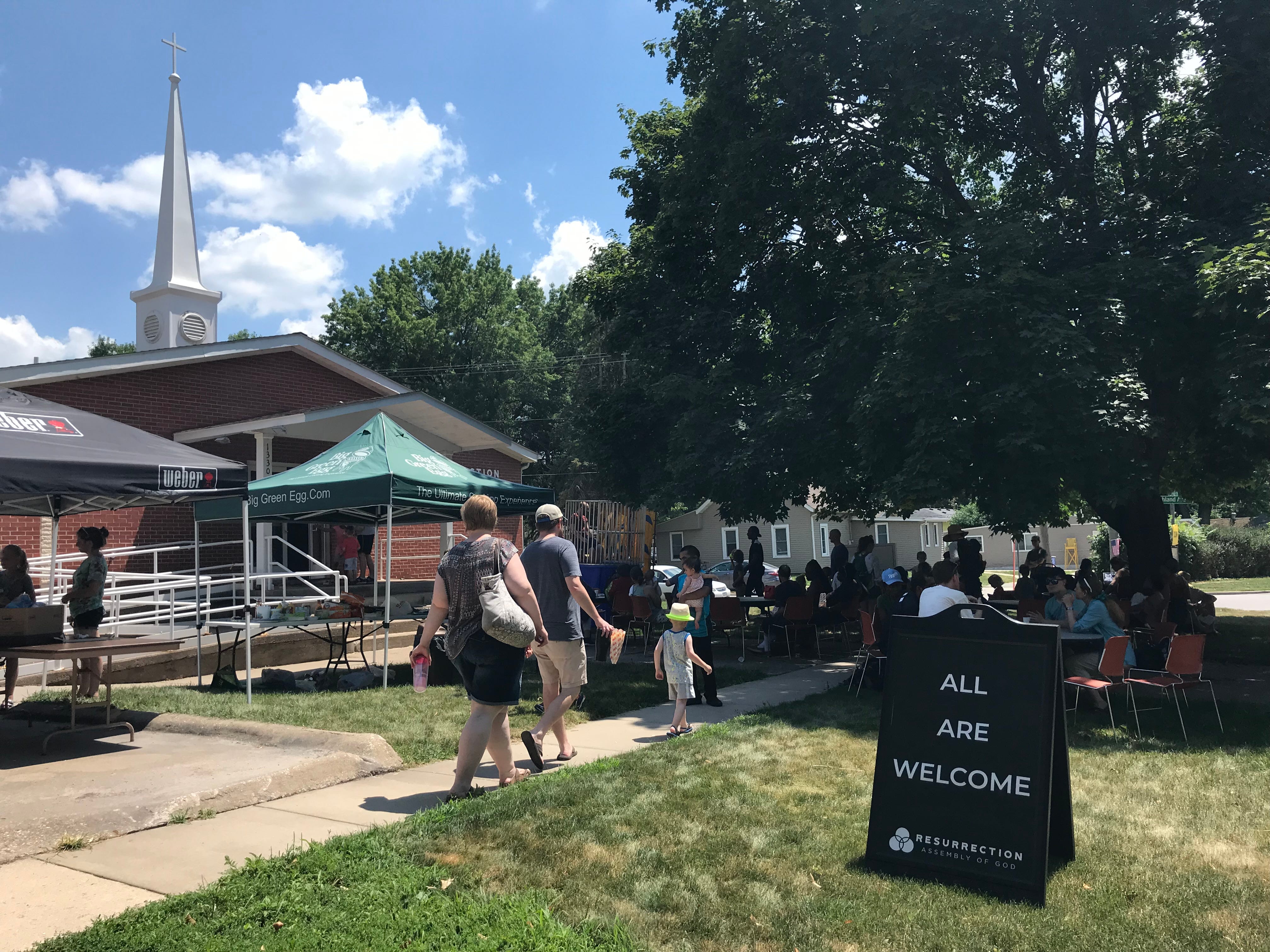
Lear tells the story of Resurrection Assembly, a small, multicultural, lower-income Assemblies of God congregation that was nearly dead. No pragmatic techniques saved it. Instead, renewal came as the church reshaped its worship around Word, Table, prayer, creed, and the expectation of the Spirit’s work, what Lear calls “slow burn revival.” As Lear describes it in the final chapter, this is revival that “burns like the charcoal Jesus used to cook bread and fish for his disciples”‚ not the consuming fire of Elijah’s altar, but the kind that “stays lit over the long haul.”[2]

This is not revival as spectacle or strategy. It is God’s steady, long-term work, unfolding as the church gathers faithfully week by week. This picture is directly connected to my story.
After years of laboring to develop sermon series and create plans for spiritual formation as a lead pastor trying to create a spiritually vibrant church community, I needed a new way forward. In 2019, a handful of my pastor friends and I began preaching through the lectionary together. We met weekly on Zoom to wrestle with the texts and kept a group chat going to share insights and questions. The rhythm of the church calendar, along with the steady cadence of the assigned Scripture readings, proved unexpectedly powerful and generative.
Somewhere along the way, our church began to celebrate Communion weekly. Coming from a Pentecostal background, I shared the reservations Lear describes. One of his own leaders voiced it plainly: the Lord’s Supper might “actually become less special if we celebrated it all the time.”[3] Would this become rote? Would it dampen the Spirit? However, as we continued to share the table each Sunday, it became the gravitational center of our gathering. Weekly Eucharist became a way to re-member, to be put back together into the story of Jesus’ life, death, and resurrection. It did more for our spiritual lives than the most passionate altar call ever could.
I also deeply appreciate Lear’s emphasis on reading substantial portions of Scripture aloud in worship. His practice is deliberate: “We started reading it out loud, sometimes in large portions, as an act of worship,” [4] with a minimum of three passages read publicly every Sunday, grounded in the New Testament’s charge to “devote yourself to the public reading of Scripture” (1 Tim 4:13).[5] I have preached through entire biblical books so that over the course of a series, our people hear whole books of Scripture read publicly. However, engaging the lectionary provides more than exposing congregations to large portions of scripture. One of the great gifts of the lectionary is that it keeps us from simply returning to our favorite hobbyhorses and instead draws us into the breadth of God’s word.
For that reason, I am convinced that pastors need to reflect deeply on the liturgy of their churches, whether they use that term or not, and intentionally craft what Lear calls “formational worship‚ the kind of worship that forms Christian disciples over the long haul”[6]‚ rather than merely funneling people toward the offering box and altar call.
Lear’s book does not merely inspire. It also exposes several gaps that our movement still needs to address.
First, there is what I will call the Trinitarian gap: Lear himself models what he envisions: “From the very first moments of our gathering to the very last, we confess and worship God as Trinity.”[7] However, the book largely assumes that readers already share this conviction. My experience is that many Pentecostals are woefully uninformed and uninterested in Trinitarian theology. It often feels impractical, as it offers no immediate payoff. However, when I began coursework at Luther Seminary, I came to realize just how foundational a Trinitarian worldview is for worship, prayer, mission, and pastoral life. We need much more intentional teaching on the Trinity in Pentecostal circles to address this issue.
Second, I think this book points toward the need for a Trinitarian pastoral care plan and, frankly, a Pentecostal catechism shaped by a slow-burn revival. Lear himself hints at this: “This book could be rewritten as a catechism‚ a paradigm of discipleship for new Christians.”[8] He sees the need. However, he leaves the catechism unwritten. Perhaps this work will spark a follow up. “Resurrecting Formation: A Pentecostal Catechism for a Slow Burn Revival” has a nice ring to it. I could see a series that would help Pentecostals address the need for more intentional Trinitarian formation. If our liturgies become more sacramental but our counseling, visitation, and formation do not follow suit, we will still be running on half an engine.
Third, I see the lectionary as a natural ally of Lear’s vision. Lear mentions it only in passing; ‘he notes that Resurrection Assembly “at times” sources passages from a lectionary following the liturgical calendar, ’ but treats it as an option rather than a framework. The lectionary’s global rhythm of Scripture seems to me to be a perfect complement to everything else he argues for. It roots a local Pentecostal congregation in the wider church and reminds us that slow-burn revival is not merely about my church’s moment. It is participation in God’s long story with people across time and space.
As someone who has both chased revival and been bruised in the chase, I am grateful for Resurrecting Worship. It offers a quieter, slower, more sacramental, more Trinitarian, and frankly more sustainable vision of renewal.
My hope is that this book will shape not only our Sunday worship, but also our teaching, pastoral care, and catechesis, perhaps even our use of the lectionary, for the slow-burn revival our congregations so desperately need.
[1] Joseph Lear, Resurrecting Worship: A Pentecostal Liturgy for Slow Burn Revival (Cascade Books, 2025), 2.
[2] Lear, Resurrecting Worship, 72.
[3] Lear, Resurrecting Worship, 32.
[4] Lear, Resurrecting Worship, 51.
[5] Lear, Resurrecting Worship, 51.
[6] Lear, Resurrecting Worship, 5.
[7] Lear, Resurrecting Worship, 13.
[8] Lear, Resurrecting Worship, 75.