


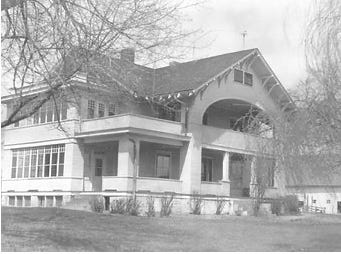
I recently preached at a “church house” called Genesis. Yes, I said that correctly: it’s not a "house church,” it’s a house that’s been turned into a church. It’s big, and it’s white. And they have a lovely little community there called Genesis.
Paid subscribers get the full sermon below. Before you read (or sign up), I want to highlight just a few things that will help both the pastor in their preaching discipline, and the congregant understand the levels preachers are often working with to communicate to different levels of Christian maturity.
First, notice that I ask a hermeneutical question without using that particular word. “Hermeneutics” is the philosophical discipline of interpreting texts, focusing on what meaning one can expect to get from any particular text. With reference to the Bible, it’s always about asking, “what does this text mean?” Which, as I’m sure we’re all aware on some primordial level, is quite the difficult question to answer.
In this sermon, I ask a question that touches on a hermeneutical school called reader-response theory—the idea that we make meaning with the text by bringing our own experiences to it. You’ll notice how I negotiate that question when you see the word “elephant” 😋.
Second, I also intentionally preach four separate passages in one sermon. Genesis uses the Revised Common Lectionary, which has four passages that are connected thematically and theologically every Sunday. It’s a great resource.
Notice how I filter each passage through the main one, the Parable of the Sower. It’s not only a lesson in seeing how the Bible fits together, but also how to read the Old Testament and New Testament as a single Scripture (which is also no easy task!).
Finally, I want you to notice how I bring the whole sermon back to the Rule of Faith, which is the core doctrines of the church through which everything else gets interpreted (notice this is a hermeneutical matter again!). I bring the Parable of the Sower back to death and resurrection in Jesus Christ before connecting it up with the Lord’s Supper.
It’s (again!) no easy task to bring every sermon back to those things, but that is the precious discipline preachers are called to.
Give it a read, give it a share :)
