


In view of officially going paid next week on Pastoral Theology, I’m reposting one of my most popular posts. It really gives voice to what this Substack is all about.
The attention that posts like this one got are in part what convinces me that my subscribers find what I do on this platform valuable and worthy of their resources.
As I said in my recent post, I’m entering my HUSTLE ERA. Take a look at it, and I invite you to become a paid subscriber.
Paid subscriptions have already started coming in before the official launch, which is truly exciting 😆
But before you read the original post…
Here’s a reminder of what you’ll get with a $ paid subscription $:
All Paid Posts:
Pastor Privileged Monthly
Book writing updates and insights into the process of writing and publishing
Conference and speaking content from events you can’t be at (I’ll be speaking at the Center for Pastor Theologians conference this fall!).
All things Pastoral Theology with my unique Pentecostal, PhD, Third Culture Kid, Justice-worker perspective.
Monthly “Office Hours” Thread where subscribers can ask me anything:
Theological, Biblical, and Pastoral curiosities
Resourcing for your own research, educational journey, and ministry/non-profit leadership.
Life advice for career moves, ordination, and educational paths.
Pentecostalism, global Christianity, political theology or literally anything that comes to mind.
Think of it like the opportunity to have a brief conversation after church after you’ve already heard me preach 😁
Be Part of the Pastoral Theology Team
More books are coming, including Tongue On Fire: Recovering the Spirit and Power of Pentecostal Proclamation, and you’ll get first dibs on being part of the launch team.
Opportunities to write guest posts
Priority for one-on-one zoom chats.
Paid subscription tokens to share with friends and family.
Paid tiers are available now, but paid posts are launching June 1st
Monthly: $7
Annual: $70
Founding Member: $207.77
The first 25 founding members get a free copy of my new book!
(I’m keeping the numbers biblical 😉).
Tradition and the Spirit, or Let’s Go Looting
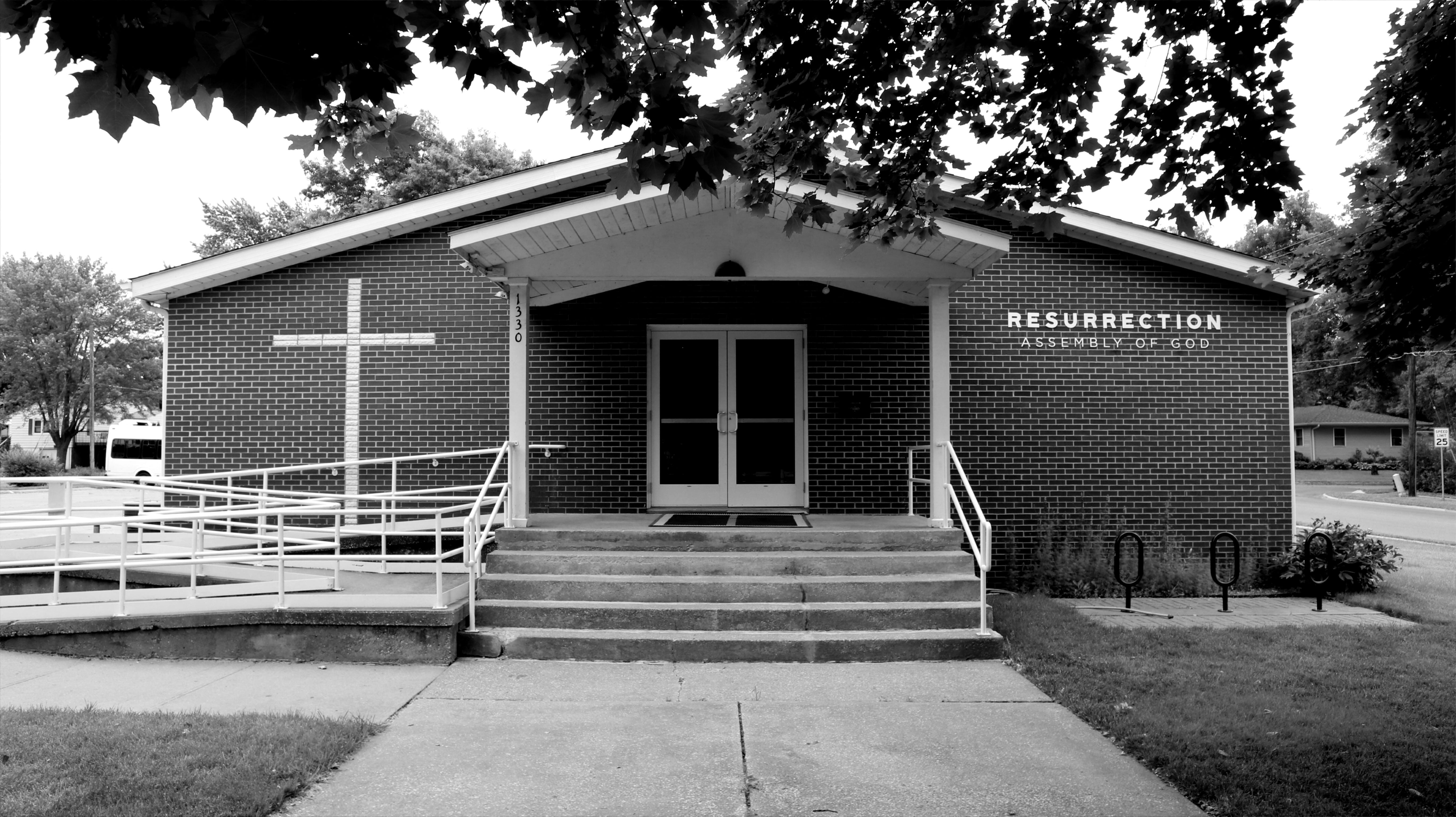
Five or so years ago a retired reformed pastor knocked on the door of Resurrection Assembly. He told me he felt the Spirit had directed him to stop. He’d been praying for the church as often as he drove past it, and finally felt like it was time to confess. We set up a time to meet for coffee, and we’ve kept drinking coffee regularly ever since.
Stan has been an absolute gift. He’s never once lorded it over me that he has decades of pastoral experience and spiritual disciplines on me. Quite the opposite—he routinely insists that I pray for him at the end of our coffee dates. He might not know it but I’ve always paid attention to everything he’s said and done, because I’ve seen—and so anticipate—that there’s layers of wisdom in his most casual utterances.
One of the layers that I’ve picked up on is that Stan himself didn’t make it all up as he went along through his life and pastorate. The well I sneak sips of water from when I hang out with him is a well that runs deeper than him and has existed long before he was born.
I contrast this with my experience of the elder pastors in my own movement whose wells aren’t—and can’t be—quite as deep. I’m not criticizing them. The reality is that the Assemblies of God is a young, conversionist movement. With it being only about 125 years old, few pastors are second or third-generation church leaders. Most retirement-age pastors I’ve met didn’t grow up in the movement. If they grew up in church at all, they had a distaste for it until the Spirit led them to knock on the door of an Assemblies of God congregation.
That has led to a movement of pastors and church leaders who’ve had to make it up as they went along. Again, if they grew up in a church, it was a liberal protestant or Catholic tradition that had failed them. So drawing on the wells of those traditions would at best feel like raiding Egypt as the Israelites did before embarking on the exodus. Turning around to look would be tantamount to looking back on Sodom and so to become a pillar of salt. It’s a dramatic way of putting it, but it’s how many actually feel.

The Assemblies of God is a renewal movement and part of the on-going Pentecostal takeover of world Christianity. This has all sorts of benefits to it. But we also need to admit its limitations. We simply don’t have the generations-long roots of spiritual maturity.
My earliest memories of spiritual discipline—prayer, Bible reading, and cultivating the fruit of the Spirit accordingly—are from when I was 7 years old. I’d sit on the screened-in porch in Dédougou, Burkina Faso, with my mother at 6am, just when the sun had come up. She’d have our dog, Annie, on her lap, and eyeballing us from the corner was my pet chameleon (brilliantly named “Chamellia”). We’d sit in the silence of the morning with our Bibles open and pray together. (It was only as silent as it could be with the roosters crowing and the infant goats braying for their morning milk in the distance). I could hear my father praying in tongues in his office, which was just a converted concrete storage closet with a metal door, a few feet away.
I’m 39 years old now. That means that for 32 years I’ve had daily spiritual discipline. I began ministering in the church when I was about the same age—going to pagan villages for outreaches with my father, and aiding my mother’s kids and youth ministry by being her personal puppeteer and clown. There simply has not been a single season in my life where I haven’t been involved in some ministry in the local church. There are innumerable pastors who are twice my age in the Assemblies of God that don’t have that many years of daily spiritual maturation and ministerial experience.
Again, I’m not criticizing pastors who are twice my age with less time on the spiritual clock. Nor is time everything. But it is something. The simple reality is that it’s been difficult to find elders in my own movement who have a spiritual authority I can submit to. Yet, submission to an elder Christian faith and walk is precisely what I’ve craved.
That lack of spiritual authority on an individual level is reflected corporately. The Assemblies of God finds its roots in the 1906 Azusa Street Revival. Virtually every historian agrees that it was an astounding, marvelous, church-changing, and world-changing event. But I’m also not the first to say that my movement has regrettably functioned as if church history began with Azusa Street even if we’ve formally said otherwise. There’s a deep well of church life, spirituality, and wisdom that Pentecostals are invited to drink from. We’re robbing ourselves and shortchanging the next generation when we don’t.

Those who know me know that I am not reticent to criticize Christian traditions that have gone lifeless with age. There’s generations of wisdom in the historic church, but those churches have often long lost the baptism of fire that fell on the day of Pentecost. Yet it’s also worth saying the inverse: you can’t keep a fire going with green wood.
The good news is that none of us—Pentecostal or otherwise—need to choose between the depths of Christian maturity that stretch back millennia and the Holy Spirit. We can have both.
I want both. Don’t you?
Leave me a 💭.
Or hit that ❤️ icon to let me know this resonates.
If you’re compelled that tradition can be baptized in the Spirit, consider sharing