


Tyler Bream and I go way back. Our friendship was originally forged translating the New Testament together in Koine Greek III at Evangel University as undergrads. Years later, our paths crossed again when I became the lead pastor of Resurrection Assembly of God in Iowa City where Tyler happened to be attending and serving in numerous capacities as a lay minister. He now lives in Edenton, NC which is a long ways from Iowa, but I’m thrilled we’ve kept in contact.

One thing that’s been a constant in our relationship has been our mutual love for the Scriptures. And though our academic and ministerial paths have taken significantly different turns, I’m delighted that we’re both so persistently delighted by the Bible. I think that delight is the Holy Spirit.
Tyler is an incredible communicator with a passion to see the mysteries of the Christian faith communicated with clarity and inspiration to every congregant regardless of job, lifestyle, or educational experience. This is what Pastoral Theology with (me) Joseph Lear is all about, which is why I’m thrilled to spotlight Tyler.

Give it a read. You’ll enjoy it.
And make sure to share it with a couple of people who will be similarly inspired.
It was a Sunday afternoon, and I was trying to wrap up a master’s degree by finishing a thesis on water baptism.
I was stuck.
Everyone in the New Testament who talks about water baptism points to a different place in the Old Testament, and I was trying to figure out why.
John the Baptist evokes the crossing of the Jordan River in his baptism (Matthew 3, Joshua 4).
Paul connects it to the crossing of the Red Sea (1 Corinthians 10:1-6, Exodus 14).
And Peter connects it to the flood in Genesis (1 Peter 3:21, Genesis 7).
Clearly, they are all talking about the same basic thing, but they couldn’t seem to agree on which Old Testament passage was the one that water baptism was based on.
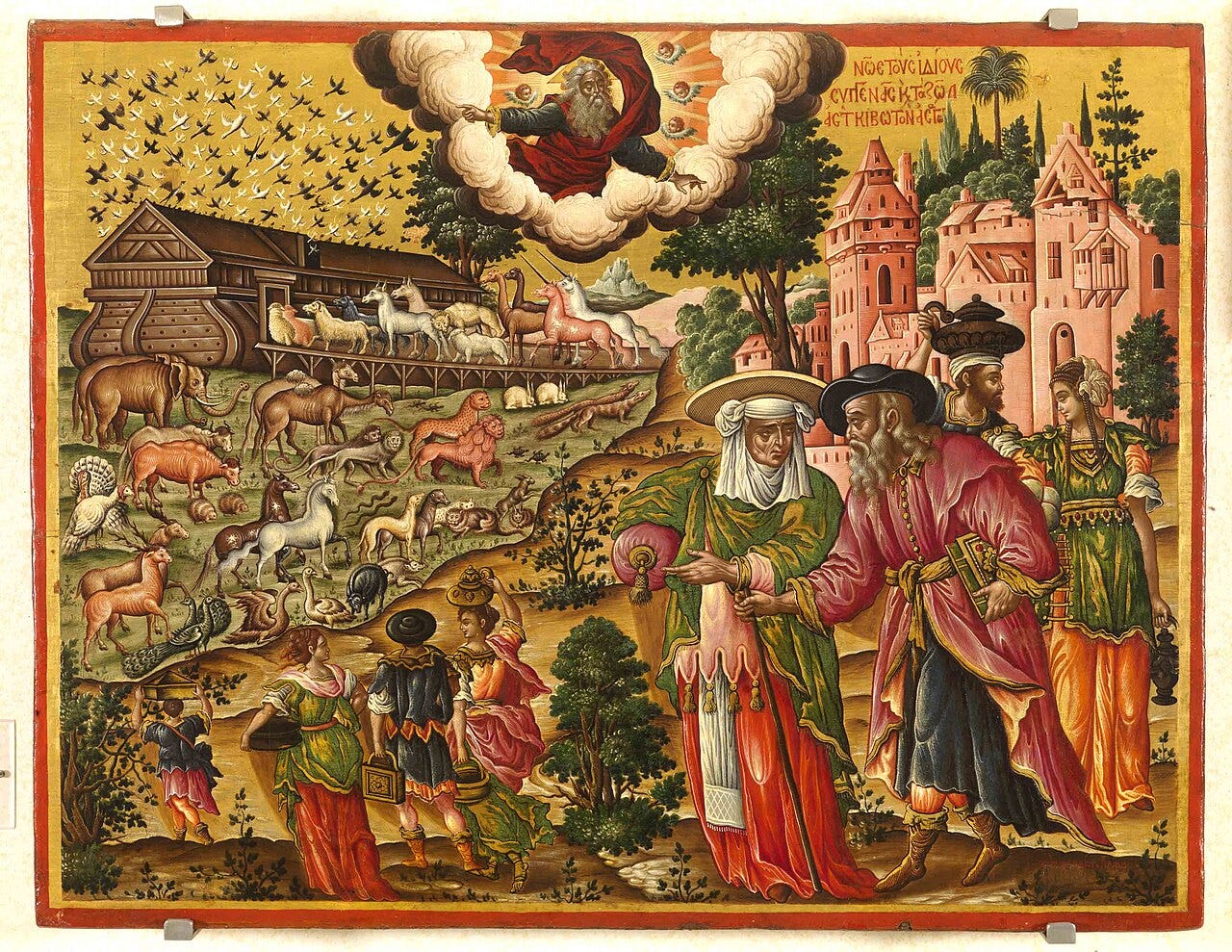
1635-1692Then, like Neo in The Matrix, I finally saw it.
It came like a lightning bolt; adrenaline shot through my body as this massive (for me) project suddenly snapped together, and my understanding of the entire Bible shifted unexpectedly and forever.
What came together was this: the theme of water hovered beneath the surface of much of the biblical text, breaking out at critical and often unexpected junctures in the narrative. This theme of water, like an unseen underground river, connected these passages, revealing an underlying narrative with a particular logic and flow that connected the whole Bible into one unified story.
This article isn’t really about water baptism, though I think that is often criminally underrated in our Protestant churches. But if we rightly understand water baptism, and how the New Testament writers view it as something that connected their situation to powerful movements of God going all the way back to the very beginning of Scripture, it helps us see the Bible for what it really is…
…one unified story.
We read and think about the Bible in parts, bits, and pieces.
Kevin Vanhoozer has the right of it, “There are two testaments, four gospels, and a dozen or so major types of literary genres [in the Bible].” (Vanhoozer, First Theology: God, Scripture, and Hermeneutics, 28).
Our Bibles are sliced and diced into a cascading array of different divisions. Our one Bible is divided into 2 testaments, 66 books, 1,189 chapters, and the editors of our modern Bibles even add section headings to help us make use of the 31,000+ verses.
Most of us can’t help but see the Bible as if it is a book of parts, a vast collection of different stories, verses, and hard-to-pronounce names, all knitted together in a strange and mysterious way.
But is it?

The tough thing about a topic like water baptism isn’t just that different writers handle it differently; it’s that no one in the New Testament ever really bothers to give a systematic explanation for how it functions or what it means. There are only hints (Romans 6:3-4 and 1 Peter 3:21, for example).
In other words, it is assumed but never really explained.
Take, for example, Paul’s discussion about baptism in Romans 6. He’s really making a point about how Christians are supposed to live. (Cf. 6:1-2). He then uses baptism to explain why and how.
His point wasn’t “go get baptized so you can live better.” His point was “you ought to live better, or else, why were you baptized?” Baptism lives in the background of the point he’s trying to make.
Elsewhere, John the Baptist uses water baptism in the Jordan River to explain, in part, how the coming of the Messiah will be significant, explaining the mystery of the future in the shared story of the past, i.e., the crossing into the promised land. (Matthew 3:11-12).
This is when I had my Matrix moment: I saw the underlying theological logic of Scripture at work, unfolding like the long stream of code Neo finally sees running everything in the Matrix.
The reason why the New Testament writers kept looking to different passages rather than the same one was that they intuitively understood something I was just beginning to uncover. Water baptism isn’t ultimately about one single passage, story, or event, but about a critical theme that spans these different moments in the story of Scripture.
When I saw this, it opened up the Bible in a new and better way.
John the Baptist, Paul, and Peter connected water baptism to different stories not because they disagreed, but because they all agreed with each other. Each tapped into a different expression of the one unified underlying story.
The theme they tap into isn’t water per se, but that when God acts decisively to condemn (Genesis 7, Exodus 14) or save and create (Genesis 1, Exodus 14, Joshua 4), water is a physical expression of God’s work.
From the New Testament writers’ perspective, these are different stories that tap into the same unifying idea, or maybe different expressions of one overarching story.
Obviously, this has huge implications for what we think water baptism is all about.
It brings our story into the story of Scripture. In water baptism, Scripture’s story is united with our own personal story. What God did through the Red Sea and the Jordan River, he does for us, all pictured in the waters of baptism.
It reminds us of an essential theme in Scripture. Water baptism isn’t some vague, meaningless ritual we do simply because Jesus commanded us to; it taps into an essential theme that runs throughout Scripture, dramatizing it.
It demonstrates that God is the same yesterday, today, and forever. Water baptism shows everyone who (hopefully) watches that God is still doing what he’s always done.
It brings past, present, and future together into one moment. Water baptism pictures what God did, what he is doing, and what he will do, all at once.
The great thing is that this idea isn’t just reserved for water baptism. It can transform how we see all of Scripture, too.
We quickly begin to discover that Scripture tells one unified story.
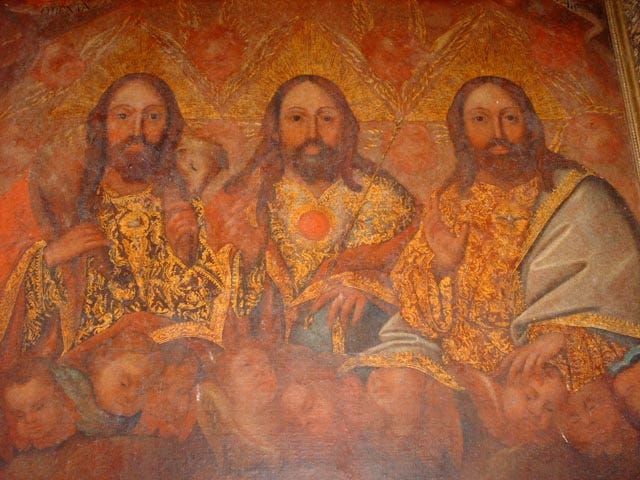
It is one.
While there are 66 books, an unknown number of authors, and different literary genres, we see the Bible as one. One of the reasons why we have so many of Paul’s letters enshrined in our New Testament, for example, is that he set out to explain how Jesus makes sense of the entire history of Israel, how the Gentiles actually fit perfectly into this history, and how everything that has happened, will happen, and is happening, is happening according to the will of God, as it has all along.
It is unified.
To say the Bible is non-contradictory is just the beginning. I’m saying that there is a miraculous unity in Scripture—that, even though the Bible is stunningly diverse in so many ways (authorship, language, nationality, literary genre, writing style, etc.), it displays a resounding unity that is impossible to explain purely in terms of its human authors. The Bible wasn’t randomly compiled, an artifact of history. It has a unity within its diversity that reflects its divine author, God, as much as its many different human authors.
It is a story.
All these books and writings, whether narrative or not, are part of a unifying story that supplies the context, meaning, and significance of every individual part. That story, beginning in Genesis, climaxing in Matthew, Mark, Luke, and John, and culminating in Revelation, is one story told over many generations.
The Bible has 66 books, and they tell one unified story.
I think there are four very practical takeaways from the fact that the Bible is actually one unified story.
Reading the Bible becomes more than a fact-finding mission. It is no longer about merely trying to figure out what a particular passage means, or how to apply it to your current work situation. Instead, it becomes about embedding yourself in the one unified story of Scripture and learning to see the world the way the Bible does.
Making sense of the text becomes easier. Everything you read connects to the larger narrative of Scripture. What is confusing in the micro becomes clearer in the macro. We call this Scripture interpreting Scripture.
It becomes more interesting. We all love stories; recognizing the Bible is, at the end of the day, a story, rather than a random collection of propositional truths, makes the whole experience of reading the Bible better.
We see our story (our life) in light of God’s story. Our lives, good and bad, become “caught up” in the story of Scripture. The Bible becomes less about what God did and said long ago and more about what he’s doing and saying right now. We’re no longer looking over the shoulders of the figures in Scripture, listening to what God said to them; we’re finally hearing what God continues to say to us.
I want to end with this bit of encouragement.
Reading the Bible isn’t about unraveling a riddle; it is about learning a story.
It is the story of what God did.
But it isn’t just about a story that happened long ago. That story relates how what God did in one generation, God does in another. So it is also a story about what God is doing for us today.
But it isn’t just about what God is doing for us today, either.
The story of what God did once, and did again, also declares that what he has done, he will do again. (Psalm 22:29-31). So, reading the Bible is also about learning about what he will do, just as much as about what he has done.
Water baptism and the Bible tell us a story that brings together past, present, and future into one multivalent moment because God is the same yesterday, today, and forever (Hebrews 13:8).
I hope you can fall more deeply than ever in love with the Bible.
Fantastic!